ServicesFoam Roofing
Foam Roofing in Casa Grande
A foam roof can keep your home dry and cooler for a long time, as long as its coating stays healthy. We find out why yours is blistering, cracking or leaking before we spray anything, so you pay for the fix it needs.
What a foam roof does, and when it makes sense
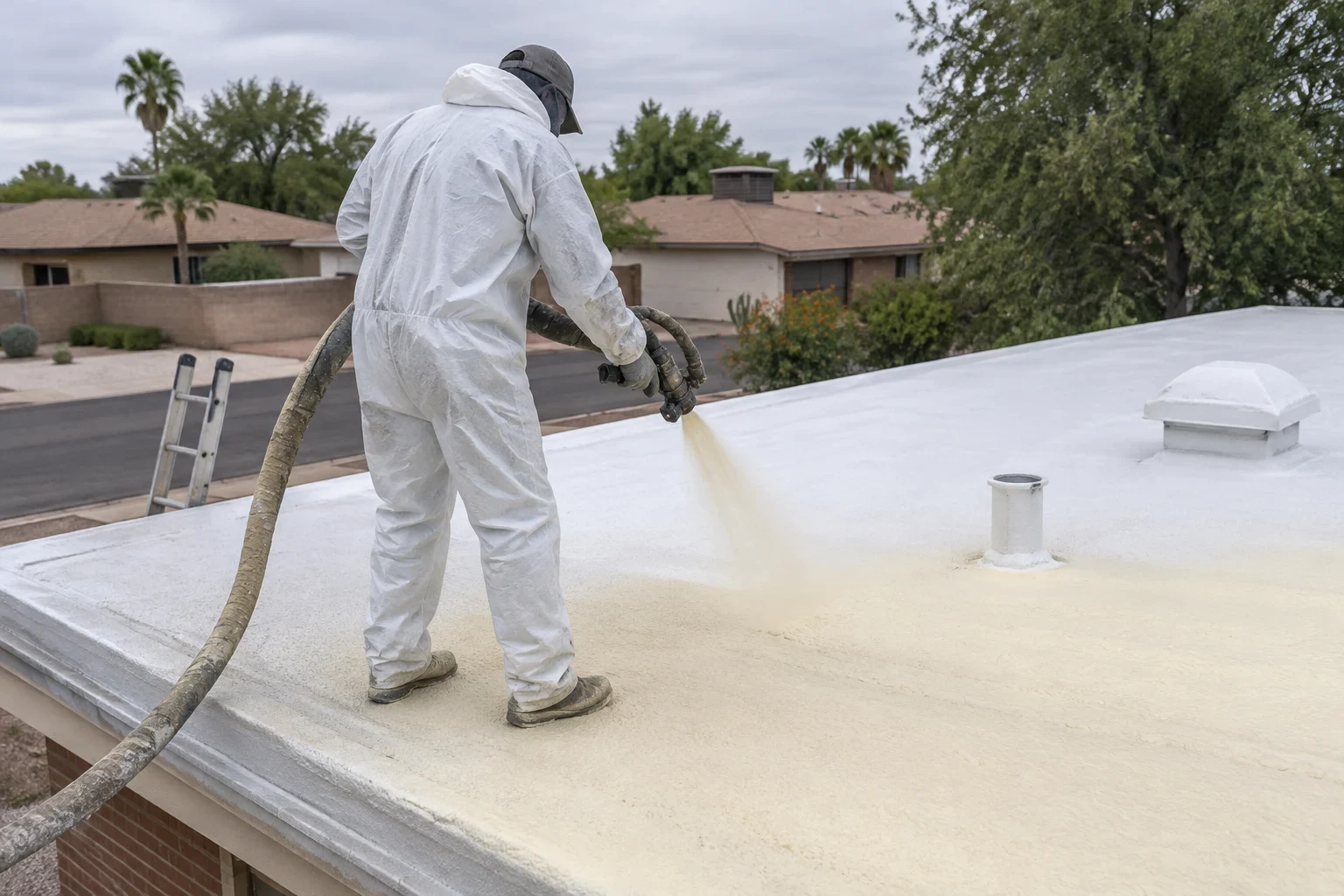
Spray polyurethane foam is sprayed on as a liquid, expands within seconds and cures into one solid layer with no seams. It insulates as well as it waterproofs, which is why it shows up on so many flat and low-slope roofs in Arizona. The foam itself does not hold up to sun, though. A coating over the top takes the UV, and when that coating wears thin, the foam underneath starts to break down.
That is where most foam problems begin, and it is why we start with the cause. A soft spot might be a failed coating, wet insulation trapped below, or water getting in around a cooler stand. Each one needs a different fix. Sometimes a recoat is all you need. Sometimes a section has to be cut out and rebuilt first. We tell you which, and why.
What our foam roofing work includes
- New spray foam roofs
- We spray foam over a clean, dry deck or a sound existing roof, built up in passes to an even thickness. Low spots get extra foam so water runs toward the drains and scuppers instead of sitting.
- Recoating worn foam
- When the foam is still solid but the coating is chalky or thin, we clean the surface and apply a fresh elastomeric coat. Catching it at this stage usually costs far less than rebuilding foam later.
- Repairs to blisters, cracks and damage
- We cut out blistered, cracked or bird-pecked areas down to sound foam, fill them, and seal the patch into the coating around it.
- Sealing around equipment
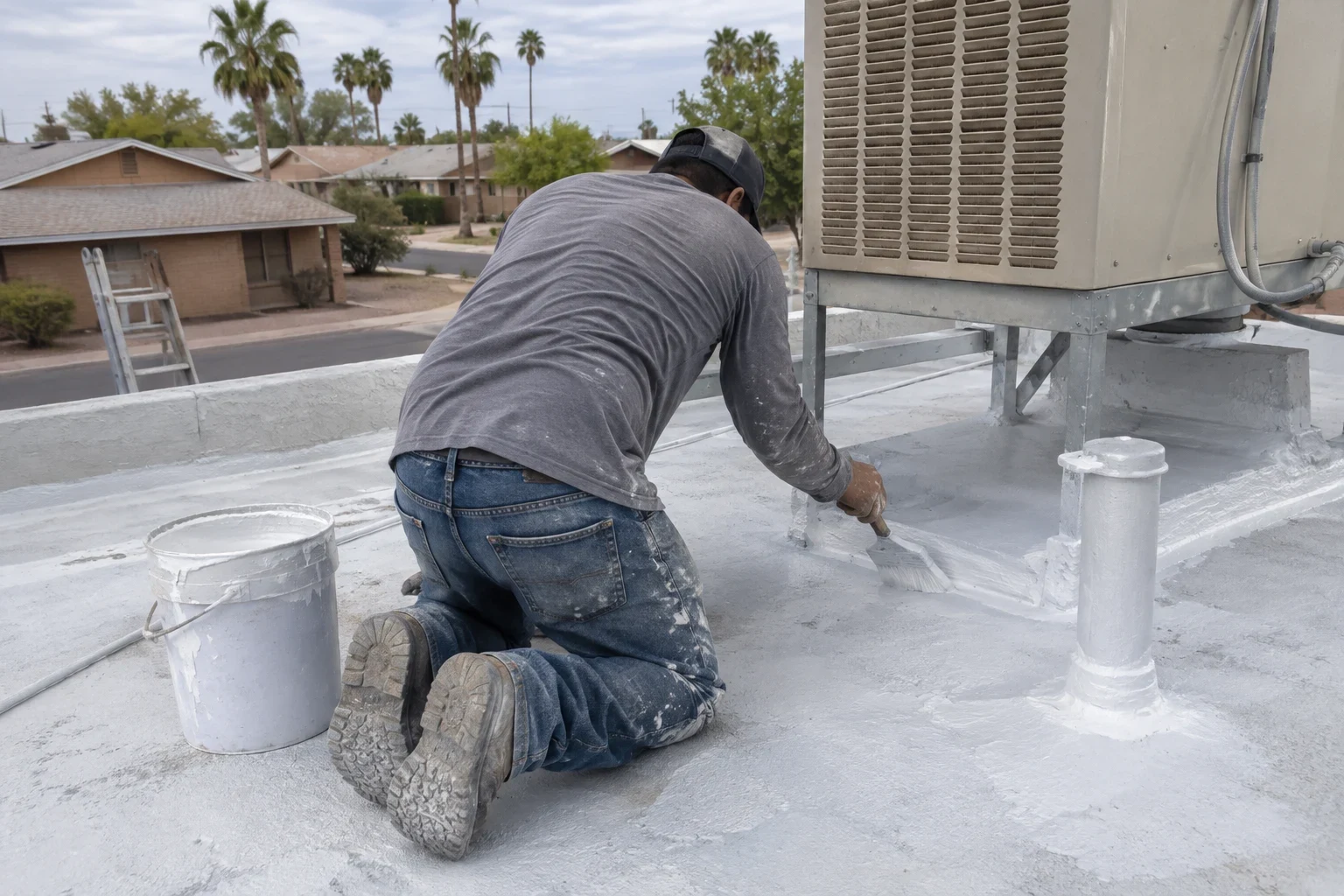
- AC units, cooler stands, vents and pipe penetrations are where foam roofs leak most. We rebuild the foam and coating around each one so it sheds water.
- Removing wet material
- If moisture is trapped under the roof, we take out the soaked insulation or foam before spraying. Foaming over wet material only hides the problem for a while.
Signs your foam roof needs attention
Brown or powdery foam
If you can see bare foam that has turned tan or brown and rubs off like dust, the coating is gone and the sun is eating into the foam itself.
Blisters or soft bubbles
Raised spots usually mean moisture or poor adhesion underneath. They tend to grow, and once they split, water has a path in.
Water standing after rain
Puddles that linger more than a couple of days after a storm wear the coating faster and point to low spots that need building up.
Ceiling stains near equipment
Stains below an AC unit, cooler or vent usually trace back to the seal at that penetration rather than the open roof.
Small holes or pecked spots
Birds sometimes peck at foam. Tiny holes look harmless but let water into the foam, where it spreads.
What affects the cost of foam roofing
Every foam roof is priced from what we find on it, so we give you a line-item quote after we have seen the roof. A recoat on healthy foam is a very different job from a tear-out and new spray. Here is what moves the number.
Roof size and shape
Square footage sets the amount of foam and coating. Parapets, curbs and odd angles add hand work.
Condition underneath
Wet insulation or a failing older roof has to come out before foam goes on, which adds labor and disposal.
Foam thickness and coating type
Thicker foam adds insulation and cost. Acrylic and silicone coatings differ in price and in how they handle standing water.
Equipment on the roof
Each AC unit, cooler, vent and pipe needs careful sealing, and some equipment has to be lifted or worked around.
How a foam roofing job runs
- 1
We look before we quote
We walk the roof, probe soft areas and check around every penetration and edge. You get a clear explanation of what we found and what we recommend, with photos so you can see it yourself.
- 2
Prep and protect
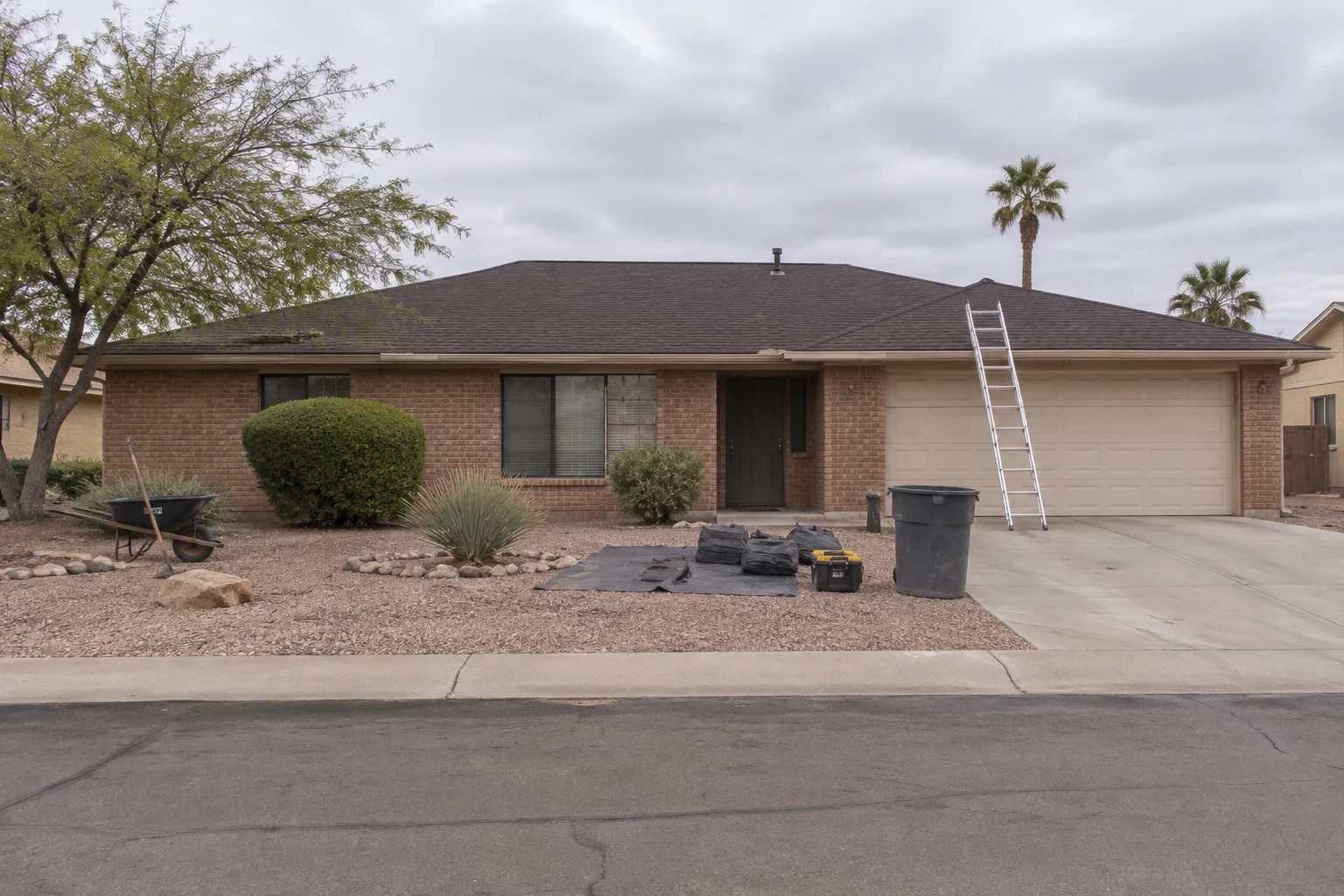
We clean the surface, cut out damaged or wet sections, and mask walls, windows and anything nearby. Spray foam travels in wind, so we cover vehicles and pick calm conditions to spray.
- 3
Spray the foam
Foam goes on in layers to the thickness we agreed on, shaped so water drains off. We only spray on a dry surface at a workable temperature, which on hot days often means an early start.
- 4
Coat and finish
Once the foam cures, we apply the protective coating in more than one coat, often with granules for walking areas. After cleanup, we tour the completed roof together so you know which spots deserve a glance from time to time.
Foam roofing questions we hear
Can you spray foam over my existing roof?
Often, yes. If the existing roof is dry and firmly attached, foam can go right over it, which saves tear-off. If we find wet or loose areas, those come out first. We check before we recommend either way.
Should I recoat or replace my foam roof?
If the foam is still firm and dry and only the coating is worn, a recoat is usually the right answer. If large areas are soaked, delaminated or badly eroded, patching costs more over time than rebuilding. We show you what we found so the choice makes sense to you.
Will the spray get on my car or house?
Foam overspray can drift, so we mask walls and windows, cover or ask you to move vehicles, and spray in calm conditions. We would rather wait a day than spray in the wind.
Can I walk on a foam roof?
Yes, for normal maintenance like changing cooler pads. Walking areas get extra coating and granules. Avoid dragging equipment or dropping sharp tools, since punctures in the coating let water reach the foam.
Who stands behind the work on my foam roof?
We do. We are an Arizona KB-2 licensed contractor, and the foam roofing we do comes with a 10-year labor warranty. As we review your quote together, we spell out what that warranty includes.
Find out what your foam roof really needs
Describe the blister, puddle or ceiling stain you have noticed, and we will schedule a visit to see it in person. We work with homeowners in Casa Grande, Maricopa, Coolidge, Eloy and nearby.